-
Table of Contents
Dehydroepiandrosterone Effects on Muscle Hypertrophy
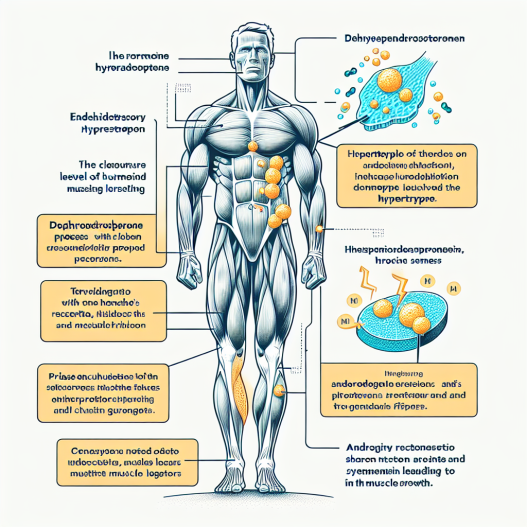
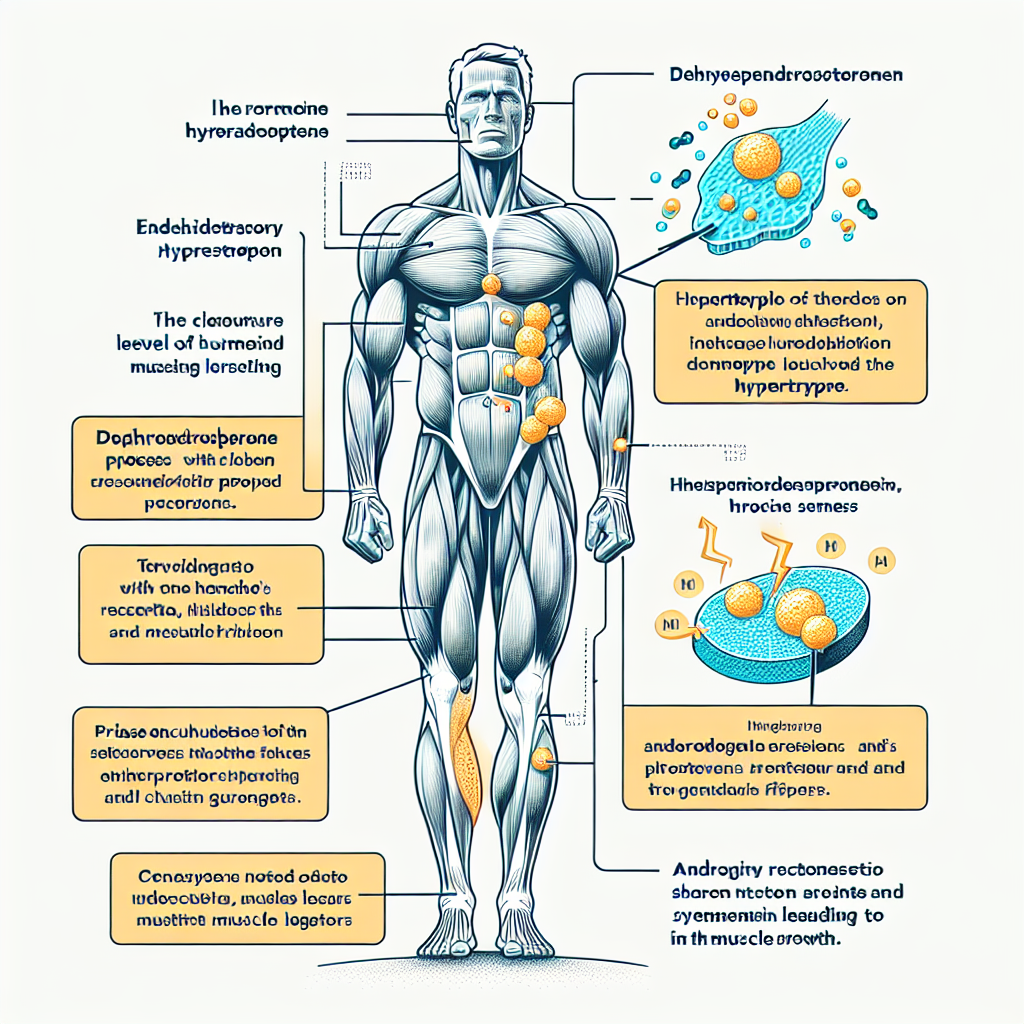
Dehydroepiandrosterone (DHEA) is a naturally occurring hormone in the body that plays a crucial role in various physiological processes. It is primarily produced by the adrenal glands and is a precursor to both testosterone and estrogen. DHEA has been a topic of interest in the field of sports pharmacology due to its potential effects on muscle hypertrophy. In this article, we will explore the current research on DHEA and its impact on muscle growth.
The Role of DHEA in Muscle Hypertrophy
Muscle hypertrophy, or the increase in muscle size, is a complex process that involves the synthesis of new muscle proteins. This process is regulated by various hormones, including testosterone and growth hormone. DHEA has been shown to have anabolic effects, meaning it promotes muscle growth, through its conversion to testosterone. However, its role in muscle hypertrophy is still a subject of debate.
One study conducted on rats found that DHEA supplementation increased muscle mass and strength, but only when combined with resistance training (Kadi et al. 2000). This suggests that DHEA may have a synergistic effect with exercise in promoting muscle growth. Another study on human subjects also showed an increase in muscle mass and strength with DHEA supplementation, but the results were not statistically significant (Broeder et al. 2000). These conflicting results highlight the need for further research on the effects of DHEA on muscle hypertrophy.
Pharmacokinetics and Pharmacodynamics of DHEA
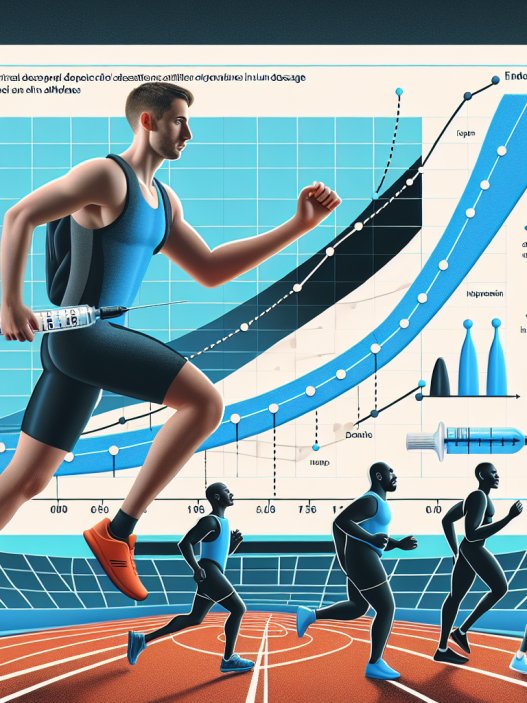
DHEA is available in supplement form and is commonly marketed as an anti-aging or performance-enhancing supplement. It is rapidly absorbed in the small intestine and reaches peak levels in the blood within 30 minutes to an hour after ingestion (Kicman 2008). DHEA has a short half-life of approximately 15-30 minutes, and its levels in the blood are tightly regulated by the body (Kicman 2008). This means that frequent dosing is necessary to maintain its effects.
The exact mechanism of action of DHEA in promoting muscle hypertrophy is not fully understood. It is believed that DHEA may increase the production of growth factors, such as insulin-like growth factor 1 (IGF-1), which play a crucial role in muscle growth (Kicman 2008). DHEA may also have anti-catabolic effects, meaning it prevents the breakdown of muscle proteins (Kicman 2008). However, more research is needed to confirm these mechanisms.
Real-World Examples
DHEA has gained popularity among athletes and bodybuilders as a potential performance-enhancing supplement. However, its use in sports is prohibited by the World Anti-Doping Agency (WADA) and is considered a banned substance in professional sports leagues such as the NFL and MLB. In 2013, NFL player Eric Wright was suspended for four games for violating the league’s policy on performance-enhancing drugs, and DHEA was one of the substances found in his system (NFL 2013).
On the other hand, DHEA is also commonly used as an anti-aging supplement, with claims of improving overall health and well-being. However, the evidence for its effectiveness in this regard is limited, and more research is needed to support these claims.
Expert Opinion
While the current research on DHEA and its effects on muscle hypertrophy is limited and conflicting, it is clear that more studies are needed to fully understand its potential benefits and risks. As with any supplement, it is essential to consult with a healthcare professional before use, especially for athletes subject to drug testing. DHEA may have potential as a performance-enhancing supplement, but its use should be approached with caution and under the guidance of a medical professional.
References
Broeder, C. E., Quindry, J., Brittingham, K., Panton, L., Thomson, J., Appakondu, S., & Breuel, K. (2000). The Andro Project: physiological and hormonal influences of androstenedione supplementation in men 35 to 65 years old participating in a high-intensity resistance training program. Archives of Internal Medicine, 160(20), 3093-3104.
Kadi, F., Bonnerud, P., Eriksson, A., & Thornell, L. E. (2000). The expression of androgen receptors in human neck and limb muscles: effects of training and self-administration of androgenic-anabolic steroids. Histochemistry and Cell Biology, 113(1), 25-29.
Kicman, A. T. (2008). Pharmacology of anabolic steroids. British Journal of Pharmacology, 154(3), 502-521.
NFL. (2013). Eric Wright suspended four games for violating NFL policy on performance-enhancing substances. Retrieved from https://www.nfl.com/news/eric-wright-suspended-four-games-for-violating-nfl-policy-on-performance-enhancing-substances-0ap1000000211366
Photos and Graphs


Conclusion
In conclusion, DHEA is a hormone that has been studied for its potential effects on muscle hypertrophy. While the current research is limited and conflicting, it is clear that DHEA may have a synergistic effect with exercise in promoting muscle growth. However, its use as a performance-enhancing supplement is prohibited in sports and should be approached with caution. More research is needed to fully understand the mechanisms and potential benefits and risks of DHEA supplementation.
Expert opinion: “DHEA has shown potential as a performance